
How to Define your Wellness Client Persona | 3 Simple Steps
Written by: Sini Hietaharju, Wellness Travel Marketing Specialist
This post is part of
series
Hey there,
If you’re anything like I was as a new yoga teacher, you might be starting this whole “ideal client” thing by jotting down something like… “women, 35-55, stressed, likes wellness.”
It feels specific, right? It’s a start.
But here’s the thing I learned the hard way: knowing who your client is on paper doesn’t mean you know how to talk to them.
How to Create a Marketing Plan for Your Wellness Business
This guide will tell you exactly How to Define Ideal Customer Persona for Wellness Business
This is what happens if you don't define Ideal Customer Persona
You end up creating beautiful offers for a vague idea of a person, and then feel that familiar pang of confusion when your marketing feels off or, worse, gets crickets.
I remember planning yoga courses that I thought people would like.
I was guessing. I was pouring my heart into chakra yoga sequences and Canva templates, but I was building on sand because I didn’t truly know the person I was building it for.
The result? Constant reinvention, money anxiety, and that draining feeling of being lost in my own business.
The game-changer—the thing that brought me real clarity—wasn’t better demographics.
It was learning to see the soul behind the stats.
It was moving from “who they are” to “why they hurt, what they dream of, and what they truly believe.”
And what triggers them to buy.
This is how you stop shouting into a void and start having conversations that feel like a warm, knowing nod. This is how you find your soulmate client.
Your “Ideal Client” Isn’t a Category. They’re a Person with a Problem
BEYOND DEMOGRAPHICS: HOW TO FIND YOUR IDEAL WELLNESS CLIENT (AND WHY IT CHANGES EVERYTHING)
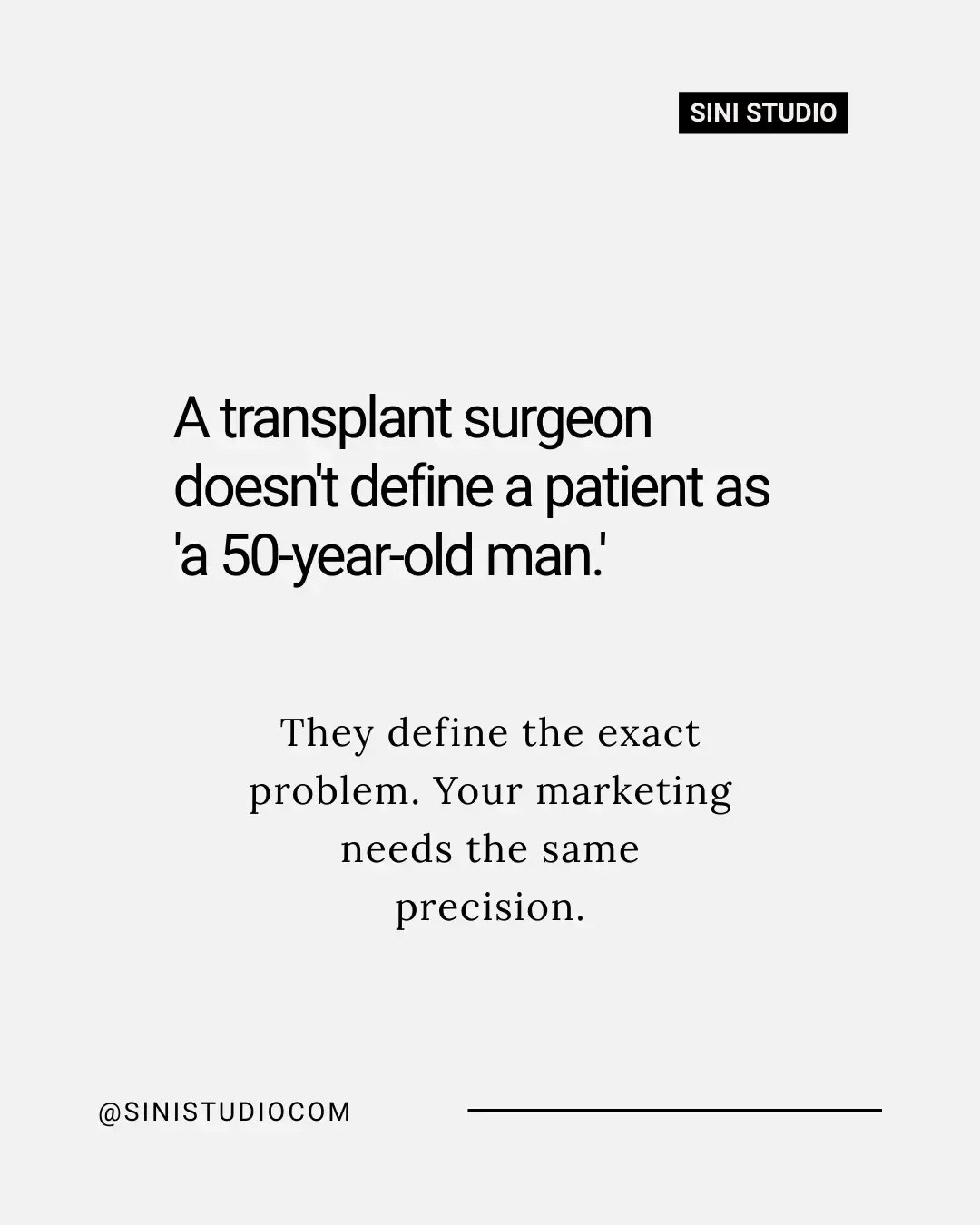
Let’s scrap the “stressed 45-year-old woman” for a second. Think of a transplant surgeon.
They don’t market to “people with health issues.” They are experts at solving one specific, critical problem. Their entire practice is built around a deep, intimate understanding of that single issue.
Your wellness business needs the same precision. You’re not selling “yoga” or “coaching.” You’re selling a specific transformation.
To attract the right people, you need to define the exact problem you solve best and for whom.
Forget age and income for now. Let’s go deeper.
The Psychographic Power Grid: Your 3-Part Discovery System
This is the framework I wish I’d had.
It’s not about creating a fictional character; it’s about uncovering the real patterns of your perfect person.
Grab a notepad and think of a past dream client or someone you’d love to work with.
Reality Check: Don't Invent, Discover
Here’s a little secret I wish someone had told me: you don’t have to make this up from scratch.
Spending days inventing a fictional “Maya” or “James” in a vacuum can feel like another abstract exercise. It might even make you doubt if this perfect person really exists.
Fastest way to find them in real life isn't through imagination—it's through conversation.
Your ideal persona is likely already in your orbit, or has been in the past.
Your goal isn't to create a character for a novel; it's to discover the patterns in the real people already drawn to your work.
Think of it like being a mindful detective, not a fiction writer.
Where to Find Your Real-Life "Ideal Clients"
You don't need a huge audience. You just need a few data points. Look for people in these places:
Your "Almost" Clients: Past inquiries who didn't book. Why were they interested? What ultimately held them back?
Your Current or Past Dream Clients: Think of your favourite 1-3 people you've worked with. What made them such a good fit?
Your Social Media Engagers: The people who consistently like, save, or comment thoughtfully on your posts. They're already giving you clues.
People in Your Network: Other wellness pros or participants in trainings you've attended. You share a world.
How to Have the "Discovery" Chat (Without Being Weird)
If the thought of "interviewing" someone makes you cringe, reframe it. You're not conducting a survey; you're having a curious, generous conversation to understand them better. You can even frame it as you doing them a favour.
You could send a message like:
"Hey [Name], I'm working on refining how I talk about my [retreats/coaching] to make sure it really resonates with people like you who I love working with. I'd be so grateful for 15 minutes of your time to ask a couple of questions about your experience and what you look for. Would you be open to a quick Zoom chat or even just answering a couple of questions over text?"
"What was going on in your life that made you start looking for a [retreat/coach]?"
"What was the biggest worry or hesitation you had before signing up?"
"What's the one change you were hoping this experience would help you make?"
"Where did you spend most of your time looking for information or options? (Google, Instagram, recommendations from a specific person?)"
Listen not just to what they say, but how they say it. Their own words are pure gold for your “Attitudes & Values” and “Language” sections.
Your Turn: From Hunches to Data
List 3-5 People: Think of individuals from the categories above. Write down their initials.
Spot the Patterns: Look at them as a group. What common pains, desires, or phrases come up?
Fill Your Template: Use these real, aggregated insights to fill out the 5-Part Persona. Suddenly, "Maya" isn't imaginary—she's an amalgamation of Sarah, Jo, and Alex, who all shared a similar story.
This approach does two crucial things: it validates that your ideal client is real, and it grounds your wellness marketing in authentic human truth, not guesswork.
You're not building a persona on sand; you're building it on the bedrock of real conversations.
Next Step: Once you've gathered these insights, plug them into your ideal customer persona section in the Wellness Marketing Strategy Template. See how much clearer and more confident it feels? That’s the power of discovery over invention.
1. The Inner World: Their Deepest Hurts & Highest Hopes
This is the core. What does it feel like to be them?
The Ache (The Pain Point): Is it overwhelm that feels like a buzzing hive in their chest? Is it disconnection from their own body? Is it the guilt of taking time for self-care, or the frustration of knowing what to do but never following through?
The Aspiration (The Dream State): What do they secretly crave? Is it deep calm, effortless energy, unshakeable confidence, or the creative freedom to live without constant brain fog?
Example for a Creative Seeking a Retreat
Ache: Feeling creatively blocked and spiritually drained from constantly outputting for work/family. Guilt for wanting "selfish" time away.
Aspiration: To rediscover their inner spark, creative voice, and sense of wonder. To return home feeling inspired and realigned.
2. Daily Life & Triggers: The Evidence in Their Routine
Where do those feelings show up in their actual day? This turns psychology into observable reality.
Their Daily Rituals (or Lack Thereof): Do they doom-scroll Instagram in bed, or do they reach for a meditation app? Do they fuel themselves with quick coffee, or do they pause for a proper breakfast?
Their Information Diet: What podcasts soothe them? What blogs do they read for inspiration (mindbodygreen, Goop, niche Substack newsletters?)? What Instagram accounts do they save posts from?
Their “Crutch” Behaviors: When the pain point hits, what’s their go-to? A glass of wine, a numbing Netflix binge, or a frantic call to a friend?
Example of a creative seeking for a retreat:
Fills journals with half-started ideas. Saves Instagram posts about "artist dates" and "finding your muse." Listens to podcasts on creativity and mindfulness.
Their "crutch" is endless scrolling through beautiful feeds, which ironically deepens their sense of lack.
3. Values & “Anti-Values”: Their Belief System
This is the glue. Values are the non-negotiable beliefs that will make them say, “This person gets me.”
Core Values: Is it authenticity over polish? Community over competition? Ritual over routine? Evidence-based science over trendy buzzwords? Sustainable growth over hustle?
“Anti-Values” (What They Reject): This is just as powerful. Do they reject “toxic positivity,” “grind culture,” “quick fixes,” or “corporate coldness”?
Examples for creative seeking for a retreat:
Values: Authenticity, self-expression, community, sacred space.
Anti-Values: Production-line tourism, generic experiences, "toxic positivity.
Pro Tip: If you have a brand story (that should be the “About” page on your website) and your Ideal Customer Persona, you can use these two together with the help of AI to come up with the Core Messaging Hooks.
AI is a great tool even for soulful marketing, IF used correctly and with relevant data about your business.
From Data to Real Person: Meet Your Soulmate Client
Now, synthesize this grid. Give this collection of traits a name and a story. Write a snapshot:
"Maya, The Burnt-Out Creative"
Maya is a freelance designer staring at a blank canvas, feeling utterly empty after meeting client deadlines. She scrolls past a retreat ad for "Reclaim Your Creative Fire" and pauses. She's not just buying a yoga retreat; she's buying permission to prioritize her own wellspring of inspiration and a safe container to remember who she is beyond her output.
This person now feels real. You can imagine what she needs to hear.
The “So What?”: How This Changes Your Marketing (Instantly)
FROM TEMPLATE TO MAGNETIC MESSAGES IN 10 MINUTES
Once you fill this template, you will have the raw material for perfect messaging. Next, we will focus on writing the ideal hooks that resonate wth our ideal customer persona(s).
This is where AI comes in handy.
You will use your brand story, connected with the Ideal Customer Personas you just created. Provide them both to AI, with this prompt:
"You are an expert copywriter for wellness entrepreneurs. Using the following client persona details, generate 5 compelling message hooks that speak directly to their pains and goals. Use language that aligns with their values.
Use this prompt with your Ideal Customer Personas + Your Brand's story for the best results from AI.
Recommended next step:
IDEAL CUSTOMER PERSONA | KPIS | MARKETING MACHINE
WELLNESS MARKETING STRATEGY
TEMPLATE
THE BLUEPRINT THAT MOVES YOU FROM THEORY TO ACTION.
Download a free template to help you create a working marketing strategy for wellness marketing.
The tool will help you take into account everything that is essential to set up succesful marketing strategy for a wellness business.
This product will be delivered via email.
Double check your email address is correct before hitting submit.


13
Essential sections
By order this free wellness marketing strategy template, you join SINI STUDIO Newsletter. Unsubscribe anytime.
Discover more free tips about
Or read the latest free tips in SINI STUDIO:
TIPS TO SELL RELAXATION AND MEMORIES
WELLNESS TRAVEL MARKETING THAT TELLS AND SELLS