
How to Turn Health and Wellness Copywriting into Words that Sell
Written by: Sini Hietaharju, Wellness Travel Marketing Specialist
This post is part of
series
You’ve perfected the sequence for your yoga retreat. You’ve curated the most nourishing menus. Your coaching program framework is airtight.
So why, when you post about it, do you hear… crickets?
You’re likely making the most common messaging mistake in health and wellness content writing: you’re talking about the features of your service, instead of the transformation it delivers.
In the world of holistic health and wellbeing, people don’t buy a “60-minute session.”
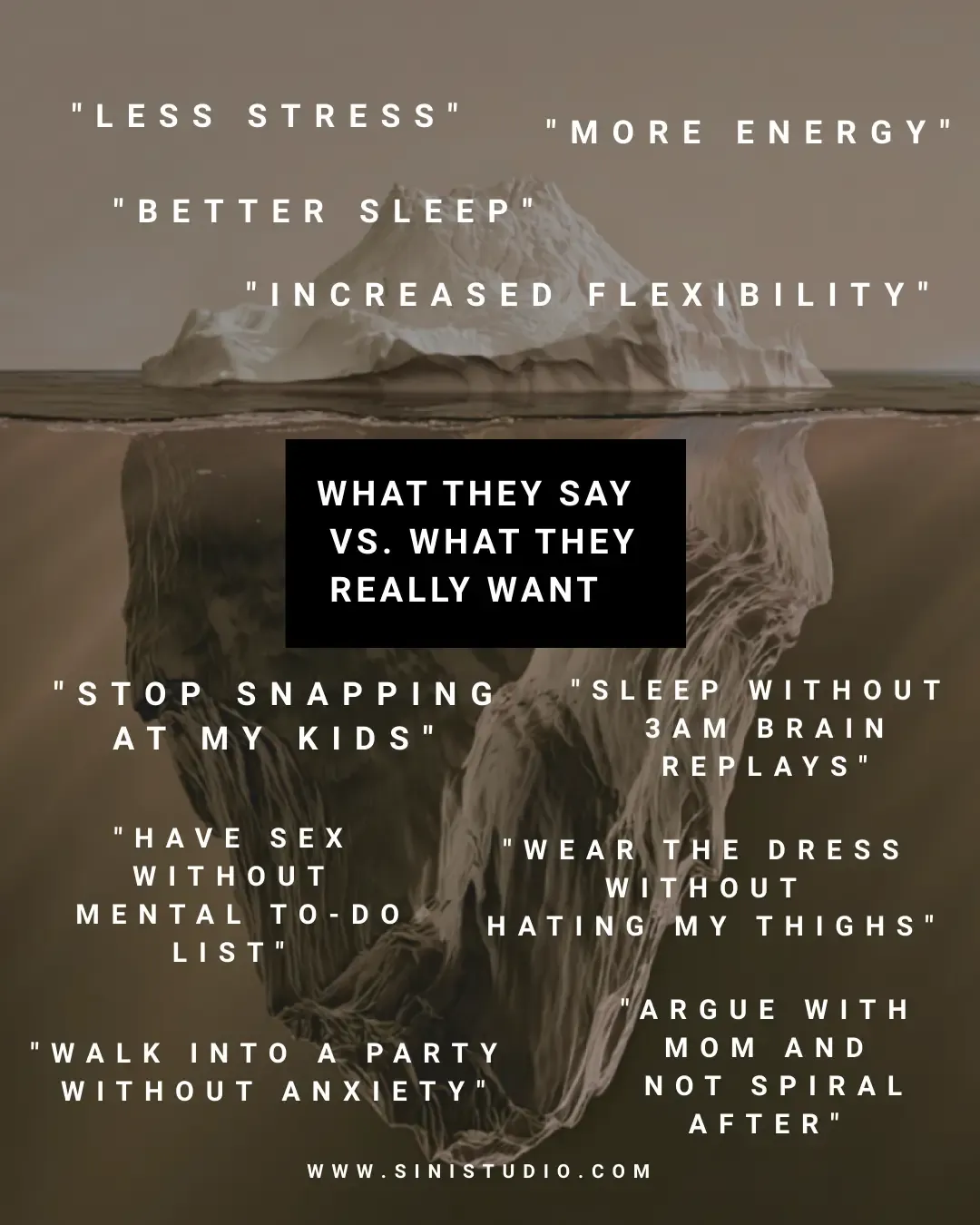
They buy the feeling of release, the hope of renewal, the promise of coming back to themselves.
BUT said in the words that they use in their everyday life, not these fancy sentences that we think are good, but are actually just jargon that doesn’t resonate with anyone.
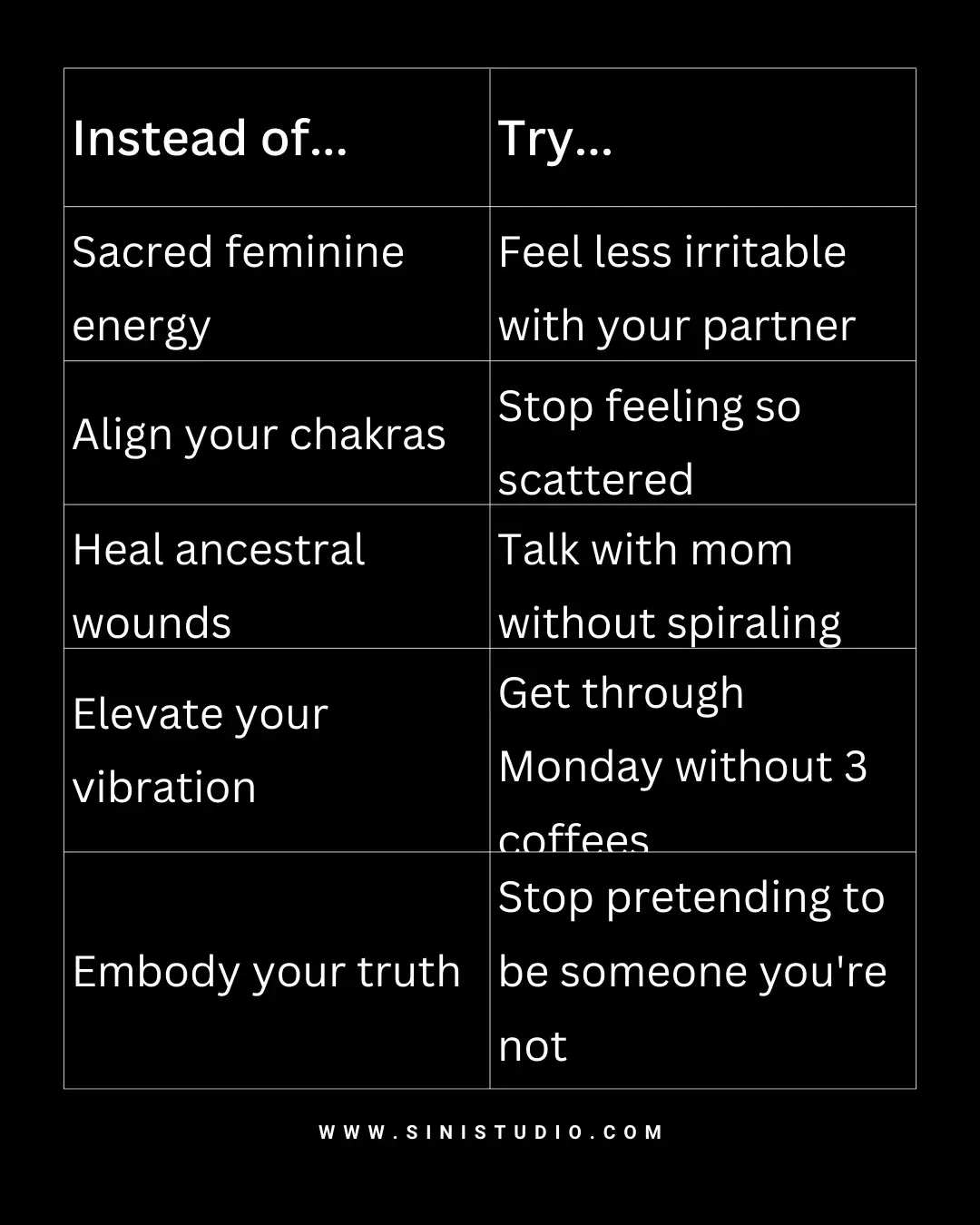
Because nobody sits on their couch after a long day thinking “if only I could reclaim my sacred feminine energy”, but they are wondering how to feel more content and satisfied with their lives without feeling like everything is too much.
Your wellness copywriting needs to bridge that gap.
This shift is the Third pillar of a solid marketing strategy: Clarity on Your Core Message.
It’s about translating what you do into why it matters with effective wellness copywriting.
Discover also the earlier Pillars:
Pillar 1: How to create a marketing plan for a wellness business
Pillar 2: How to Define your Wellness Client Persona in 3 simple steps
PART 1: UNDERSTANDING THE PROBLEM
Why Your Wellness Copy Isn't Connecting
What Is Health and Wellness Copywriting (And Why It Matters for Your Business)
Before we dive into the exact “features-to-feelings” framework, let's get clear on what we're actually talking about.
Health and wellness copywriting is the art of using words to connect with people who are seeking better health, more balance, or a sense of wellbeing. It's the text on your website, your emails, your social media captions, and your sales pages.
But here's what makes it different from other types of writing:
Regular Copywriting
Health & Wellness Copywriting
Sells a product
Sells a transformation
Focuses on features
Focuses on feelings
Speaks to the logical mind
Speaks to the emotional body
Lists what you get
Describes who you become
Why does this matter right now?
The global wellness industry is projected to reach $8.5 trillion by 2027. More people are seeking holistic health solutions than ever before. But here's the catch: with more options comes more noise.
Your ideal client is scrolling past dozens of yoga teachers, coaches, and retreat leaders every single day. The only thing that stops them? Words that make them feel seen.
That's what health and wellness copywriting does. It's not about fancy vocabulary or spiritual jargon. It's about translating what you do into the exact words your client is thinking at 11 pm when they can't sleep.
Why Your Feature-Focused Wellness Content Writing Falls Flat
Telling someone you offer a “3-day yoga retreat in the mountains” lists facts.
It speaks to the logical mind.
But the decision to invest time, money, and trust in a wellness experience is deeply emotional.
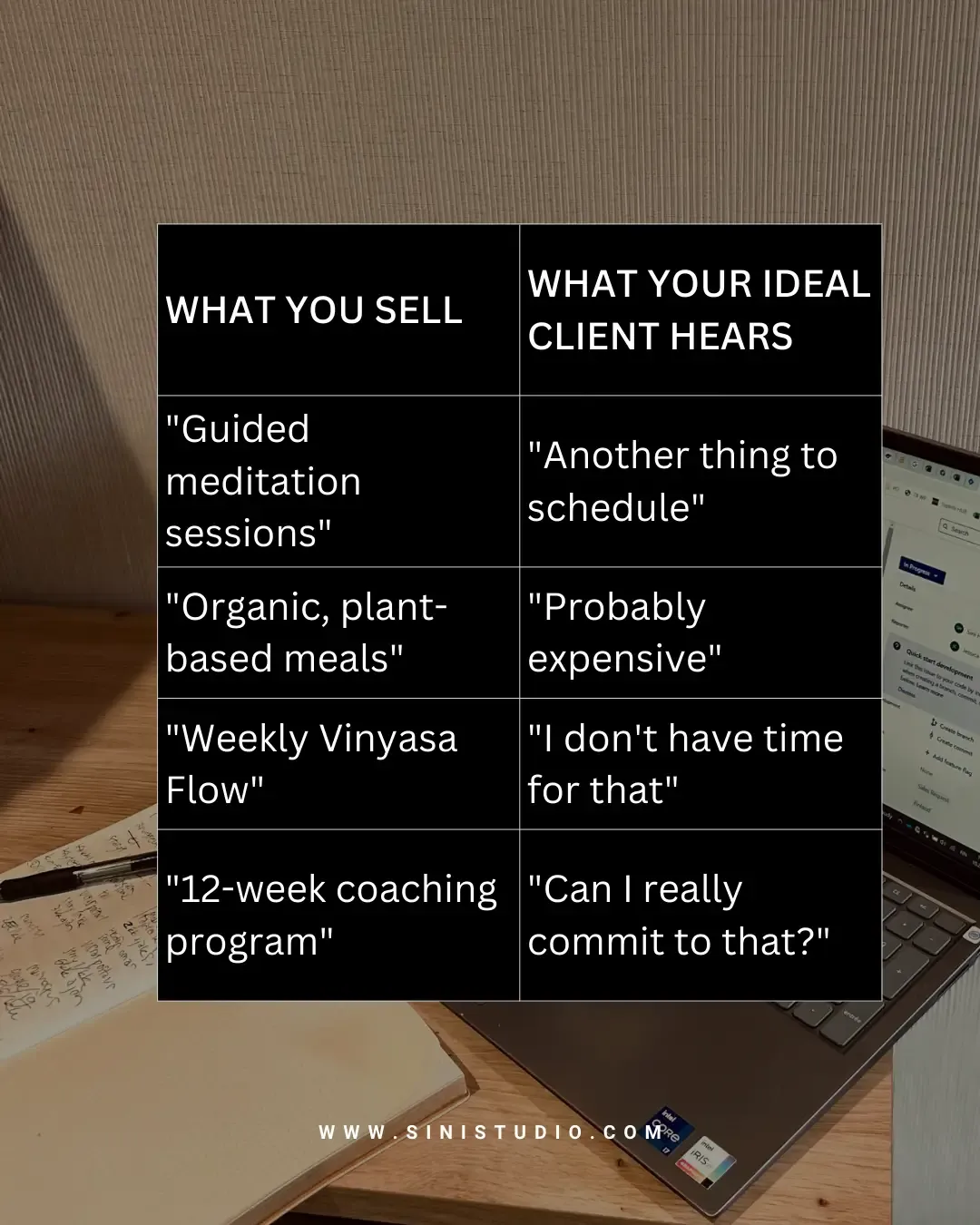
Feature: “Guided meditation sessions.”
What Your Client Actually Hears: “Another thing to schedule.”
Feature: “Organic, plant-based meals.”
What Your Client Actually Hears: “Probably expensive.”
When you list features, you invite comparison on price and logistics.
When you describe a transformation, you invite connection to a future self.
Why Wellness Pros Struggle with Writing Wellness Copy That Converts
You're not alone if this feels hard. Most wellness professionals struggle with messaging for three specific reasons:
Reason 1: The Curse of Knowledge
You know so much about what you do that you've forgotten what it's like to not know.
Terms like "pranic flow" or "somatic release" roll off your tongue, but to your ideal client, this kind of health and wellness copywriting sounds like a foreign language.
Reason 2: The Jargon Trap
The wellness industry has its own language. And somewhere along the way, we started believing that using big spiritual words makes us sound more legitimate. It doesn't. It makes us sound less accessible.
Reason 3: The Feature Habit
When someone asks "what do you do?", it's easier to list features: "I teach yoga on Tuesdays" or "I offer 12-week coaching programs." Describing transformation requires vulnerability. It requires naming the ache. And that feels scarier.
The good news? Once you see the pattern, you can't unsee it. And fixing it is simpler than you think.
PART 2: THE SOLUTION
Your Features-to-Feelings Framework
The Framework: Your "Features to Feelings" Translator
Here’s a simple, two-step process to reframe your messaging. Grab a notepad and apply this to your flagship offer.
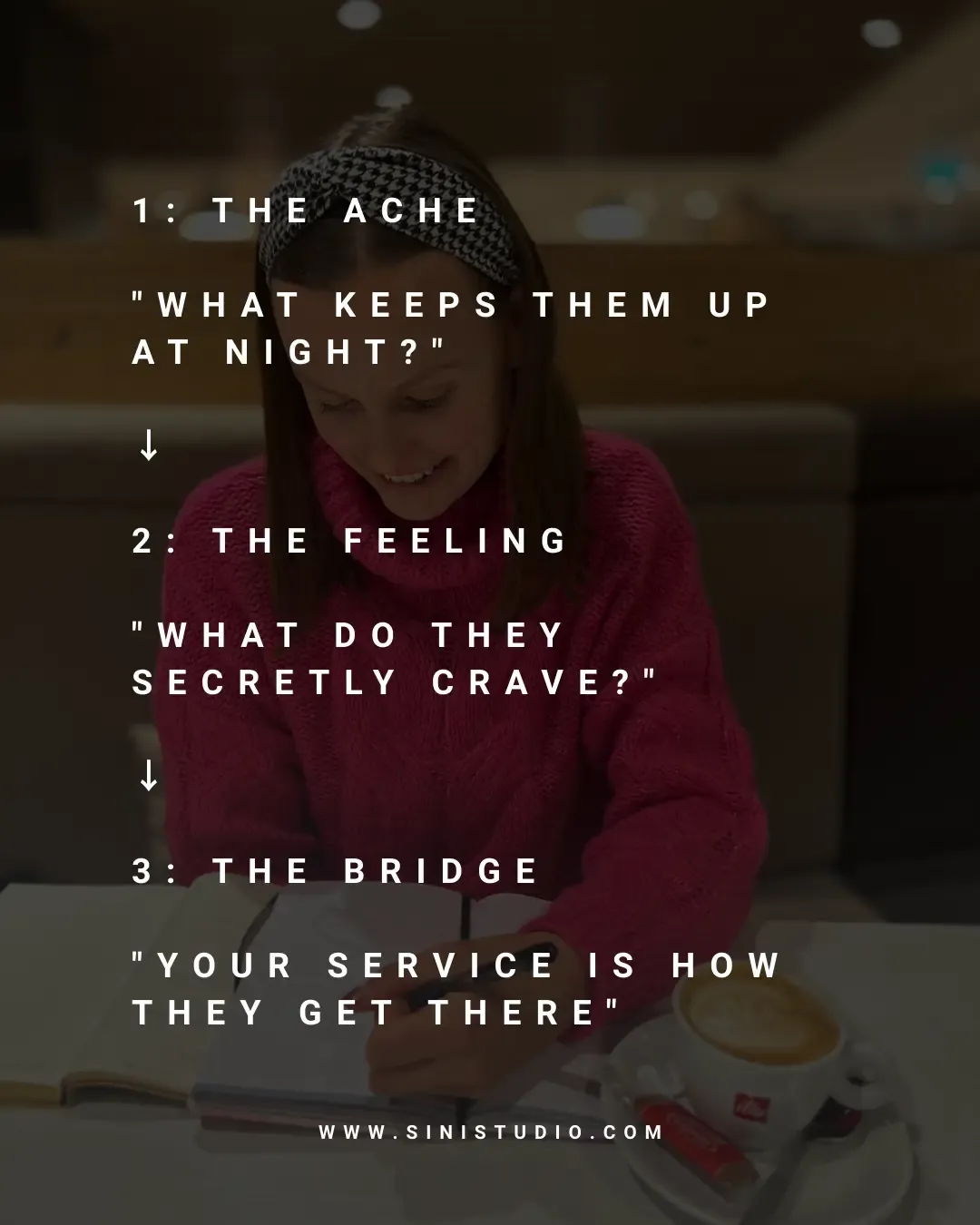
Step 1: Identify the "Before" State – The Ache
What is the specific emotional or physical weight your ideal client is carrying? Be precise.
Vague: They are "stressed."
Specific: They feel guilty for taking time for themselves, wired but tired, and disconnected from their body’s signals.
Step 2: Define the "After" State – The Transformation
What is the core feeling, shift, or outcome they deeply desire? This is your promise.
Vague: They will be "more relaxed."
Specific: They will feel a profound sense of permission to rest, reconnect with their inner calm, and carry a tangible sense of peace back into their daily life.
And if you are now feeling insecure that you don’t feel comfortable making such grand promises as “inner calm” or “sense of peace”, show it.
Show the tiny “hows” your ideal client sees how sitting by the pool with an ayurvedic smoothie after a morning vinyasa flow could make them feel calm.
Show them how an evening sun on your face during savasana could feel.
Help them imagine the exact feeling of transformation, instead of listing features.
This is also why retreat photography is so important in wellness travel marketing.



Practical health and wellness copywriting Examples: From What You Do to How They Feel
Let’s apply this to common wellness services:
For the Yoga Teacher:
Feature-Based: “Weekly Vinyasa Flow for all levels. Focus on alignment.”
Transformation-Based: “Reclaim strength and fluidity in a body that feels like your own again. Classes designed to quiet the mental chatter and connect you to your breath.”
Translated into relatable, everyday life language: Move through your day without that nagging tightness in your shoulders. Classes designed so you don't snap at your kids the second they ask a question.
For the Holistic Coach:
Feature-Based: “12-week 1:1 coaching program with weekly calls and PDF guides.”
Transformation-Based: “Move from burnt-out and overwhelmed to energetically aligned and purpose-driven. We’ll create a sustainable rhythm for your life and work so you can thrive, not just survive.”
Translated into relatable, everyday life language: Finally sleep through the night instead of waking up at 3am mentally rewriting your to-do list. We’ll figure out how to get through the week without crashing on the couch every Sunday evening.
For the Retreat Organizer (The Classic Example):
Feature-Based: “A 5-day retreat in Portugal with daily yoga, meditation, and hikes.”
Transformation-Based: “Leave the noise behind and return to your essential, serene self. An immersive experience designed to quiet the outside world so you can finally hear your own intuition again.”
Translated into relatable, everyday life language: Walk into a room full of strangers and actually feel comfortable in your own skin. An experience designed to help you stop overthinking every text message before you hit send.
Feel the difference? You can of course change the tone of voice so that it sounds more like YOU.
Because in the soulful wellness business, you don’t need to hide behind corporate jargon and pretend to seem more important with vocabulary that doesn’t sound like you.
Because you know how you build long-term relationships with clients who choose your services again and again?
It’s because of YOU and how you do it and say it. It’s about how you resonate with them, deeper than these perfect listings of features.
The goal is to speak directly to the heart of the person you’re meant to serve.
How to Use This Framework Everywhere (Website, Socials, Emails)
Once you've translated your services into feelings, you need to use this wellness copywriting everywhere.
Here's how:
On Your Website:
Hero section: Lead with your bridge statement or best hook
Service pages: Start with the transformation, then list the features
About page: Share your own "before" state—the ache you understood personally
On Social Media:
Bio: Your best hook in 160 characters
Posts: Lead with the ache, offer the feeling
Stories: Show the tiny transformations in real time (a client's smile, a peaceful moment, a breakthrough)
In Emails:
Subject lines: Use the ache ("Struggling to sleep through the night?")
Openers: Name what they're feeling ("I know you're tired of snapping at your kids.")
Calls to action: Offer the feeling ("Come feel human again.")
In Sales Conversations:
First message: "I work with people who feel [ache] so they can finally [feeling]."
Consultations: Reflect their ache back to them so they feel understood
Follow-ups: "Remember when you said you wanted to [tiny transformation]?"
PART 3: PUTTING IT INTO ACTION
Your Turn to Write
Your Action Step: The Messaging Rewrite Exercise
Take 10 minutes now. Write down your primary offer and complete these sentences:
My service helps people who feel… [Describe the "Before" Ache with emotion]
So that they can… [Describe the "After" Transformation with feeling]
My work is the bridge from… [Ache] to… [Transformation].
The final line is the essence of your new, connection-focused core message.
Why This Health and Wellness Copywriting Framework Works
This isn't just fluffy marketing advice. There's actual psychology behind why feelings sell better than features.
Emotion drives decision-making.
Neuroscientist Antonio Damasio's research shows that people with damage to the emotional part of their brain struggle to make even simple decisions—even though their logic is intact. We feel first, then we rationalize second.
The brain doesn't buy "things." It buys "better versions of ourselves."
When your ideal client reads your copy, their brain is secretly asking: "Who will I become if I work with her?"
If you only list features, you leave them to imagine the answer alone.
If you describe the transformation, you hand them the vision.
Specificity creates trust.
Vague claims ("find inner peace") feel like marketing fluff.
Specific, relatable outcomes ("stop replaying that awkward conversation from 2019 at 3am") feel like you've been inside their head. And when someone feels understood, trust builds automatically.
Start to SAY IT SIMPLY
Clarity in messaging is the foundation of confident marketing.
When you know the transformation you’re selling, everything gets easier: your website copy flows, your social media resonates, and sales conversations feel authentic.
If you loved this exercise but want a complete, step-by-step system to lock in your core message for your entire business, I’ve created the exact tool you need.
Introducing: SAY IT SIMPLY – The Core Wellness Copywriting Hook Workbook
This isn’t just inspiration; it’s a done-for-you workbook that guides you through the exact process I use with my clients (and also in my own business).
In less than an hour, you’ll move from confused to crystal clear.
Here’s what you’ll get:
The "Who" Clarity Guide: Pinpoint your ideal client’s deepest desires and daily frustrations (beyond basic demographics).
The "Hook" Generator: Transform your services into 3-5 magnetic message hooks that stop the scroll.
The "Feelings vs. Features" Translator: A fill-in-the-blanks template to rewrite all your service descriptions.
Your Brand Voice Blueprint: Define how you want to sound so every word feels authentically you.
Ideal Landing Page Structure: The psychologically effective order on all the most important pages of your website
Once you have defined these, you can finally also use AI in your business in a way that it produces copy that sounds like you and makes sense, instead of these sentences, like:
“Journey inward to illuminate your shadow self and heal ancestral wounds”
I don’t know about you, but for me, outcomes like “Spend the summer with parents and not feel like a triggered teenager again" would resonate more.😀
Jokes, aside, stop wrestling with words alone.
For less than the cost of a coaching session, you can have the messaging foundation that attracts your ideal clients with ease.
👉 GET THE "SAY IT SIMPLY" WORKBOOK & LOCK IN YOUR MESSAGE HERE
PART 4: OBJECTIONS & NEXT STEPS
What Might Be Holding You Back
When you feel like it won’t work like this for your wellness business
You might be reading this and thinking: "This feels too simple" or "I can't make promises like that."
Let's address the most common objections:
Objection 1: "I don't feel comfortable making grand promises."
Good. Don't make grand promises. Make specific promises. "You'll sleep through the night" is not grand—it's specific and measurable. Grand is "you'll achieve enlightenment." Specific is "you'll discuss with your mother and not feel 15 again."
Objection 2: "What if I can't guarantee that outcome?"
You're not guaranteeing. You're describing what becomes possible. Your retreat doesn't guarantee they'll stop overthinking—but it creates the conditions where overthinking naturally quiets. That's an honest, ethical promise.
Objection 3: "This feels too casual. I want to sound professional."
Here's a secret: "Professional" doesn't mean stiff. It means effective. Which sounds more professional to you: "Reclaim your sacred feminine energy" or "Feel less irritable with your partner after a long day"? The second one actually helps someone. The first one just sounds important.
Objection 4: "My clients are different. They understand the spiritual language."
Maybe. But ask yourself: did they come to you already speaking that language? Or did they come with a problem they wanted solved, and they learned the language from you along the way? Meet them where they are, not where you are.
How to Know If You're Ready for the Workbook
The exercise above gives you a strong start. But if any of these sound like you, you're ready for the full Say It Simply workbook:
You did the exercise but want to go deeper
You have multiple offers and need messaging for all of them
You're not sure if your "ache" is specific enough
You want templates so you don't have to start from scratch
You're tired of guessing and want a system
You want to use AI to write copy but need it to sound like you
You've tried DIY-ing your messaging and it still feels off
The workbook gives you the step-by-step system so you never stare at a blank page again.
Frequently Asked Questions about Health and Wellness Copywriting
Most copywriting advice tells you what to write. This framework shows you how to think about what you write.
It's not about prettier words—it's about fundamentally shifting from features to feelings. Once you have that foundation, the actual writing becomes easy.
No. You'll likely keep 70% of it. You're just adding the missing piece: the emotional bridge between what you offer and why it matters.
Most of your features are still valuable—they just need to follow the transformation, not lead with it.
Also from now on. you will know the framework to use fo revery single copy you write.
Yes and no. Your core message—the overarching transformation you offer—stays consistent. But each service gets its own "bridge" from that specific ache to that specific feeling. The workbook walks you through both.
The initial clarity work takes about an hour. Rolling it out across your website, social media, and emails takes longer—but you can do it piece by piece. Start with your main offer and home page, then expand.
This framework is designed for non-writers. You don't need to be a good writer—you just need to be honest about the ache and the feeling. The words will come more easily than you think.
PART 5: LET'S DO IT
Ready to Stop Wrestling with Words?
Discover more free tips about
Or read the latest free tips in SINI STUDIO:
TIPS TO SELL RELAXATION AND MEMORIES
WELLNESS TRAVEL MARKETING THAT TELLS AND SELLS